
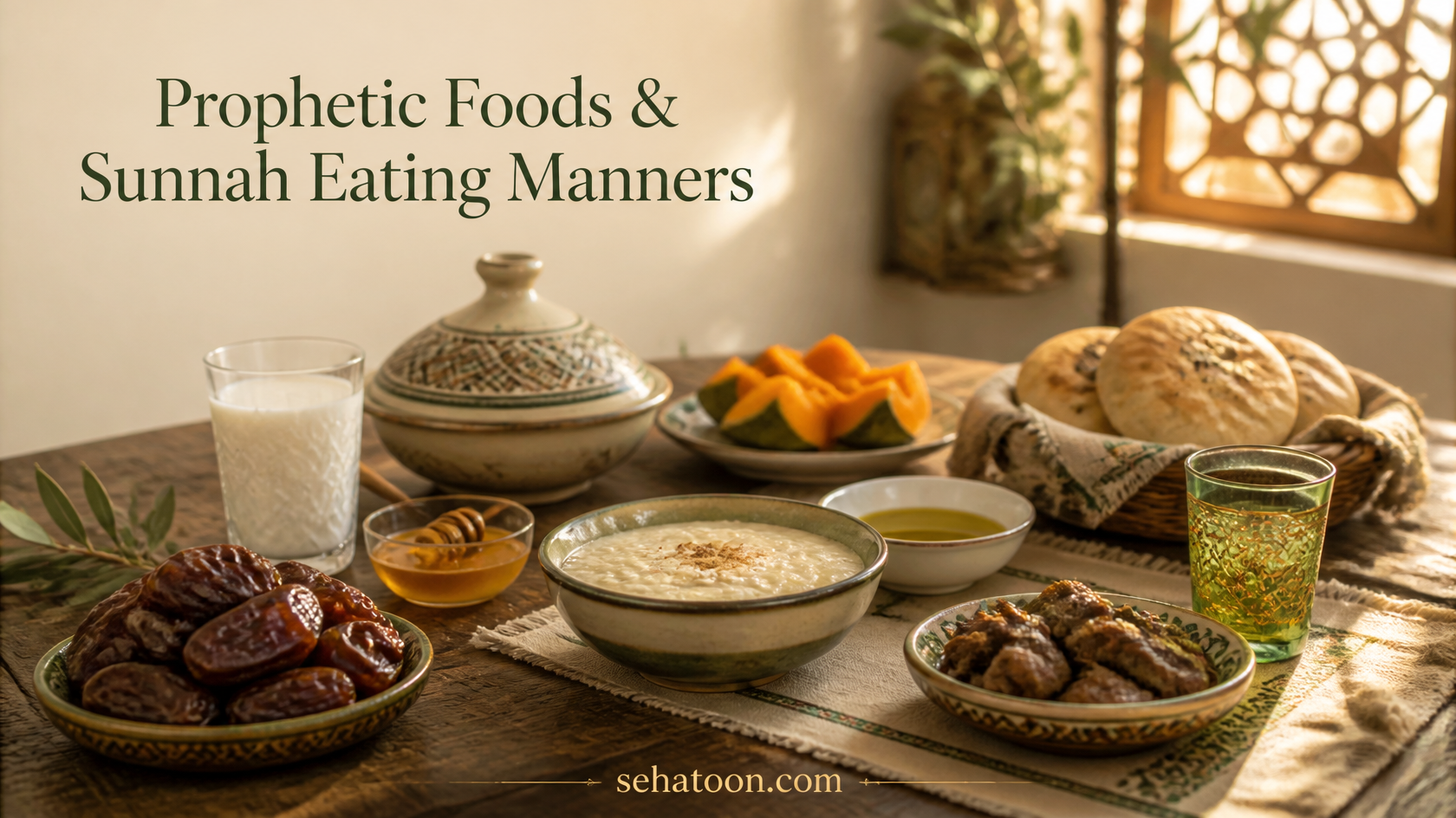
Food is an important part of our daily lives, but in Islam, eating and drinking are more than just satisfying hunger. They are also opportunities to remember Allah, show gratitude, follow the Sunnah, and share kindness with others.
The Prophet Muhammad ﷺ taught Muslims beautiful manners related to food and drink. Reports from his life also mention different foods and dishes that he ate and enjoyed.
In this article, we explore some foods associated with the Prophet’s meals and 18 Islamic manners of eating and drinking that we can practice in our daily lives.
10 Foods Mentioned in Reports About the Prophet’s Meals
The following foods and dishes are mentioned in Islamic reports about the Prophet’s eating habits. However, not every item is established as one of his personal favorites, so it is more accurate to describe them as foods he ate, praised, or that were associated with his meals.
1. Pumpkin and Gourd (Al-Dubba’)
The Prophet Muhammad ﷺ liked pumpkin. Anas ibn Malik (may Allah be pleased with him) reported that he saw the Prophet ﷺ picking pieces of pumpkin from a dish containing meat and pumpkin.
This report shows that pumpkin was among the foods he enjoyed.
2. Talbina
Talbina is a soft dish made from barley flour cooked with water or milk. It can be prepared with honey or other ingredients according to personal taste.
Aisha (may Allah be pleased with her) reported that the Prophet ﷺ recommended talbina and mentioned that it brings comfort to the heart of a sick person and helps relieve some of the sadness of a grieving person.
3. Tharid
Tharid is a traditional Arab dish made with pieces of bread soaked in broth and served with meat.
The Prophet ﷺ praised this dish in a famous hadith, comparing the excellence of Aisha (may Allah be pleased with her) over other women to the excellence of tharid over other foods.
4. Al-Hays
Al-Hays is a traditional Arab dish commonly prepared by mixing dates with ingredients such as butter or ghee.
It was known in the Arabian Peninsula and appears in reports describing food from the time of the Prophet ﷺ.
5. Meat and Chicken
Meat was among the foods the Prophet ﷺ ate. Reports mention that he ate sheep meat and that he particularly enjoyed the shoulder portion.
There are also authentic reports that he ate chicken. These narrations show that different kinds of meat were part of the food available at that time.
6. Olive Oil
Olive oil comes from the blessed olive tree. The Prophet ﷺ encouraged its use and said:
“Eat olive oil and use it as an ointment, for it comes from a blessed tree.”
This hadith highlights the special place of olive oil in Islamic tradition.
7. Vinegar
The Prophet ﷺ praised vinegar as a good condiment. Jabir ibn Abdullah (may Allah be pleased with him) reported that the Prophet ﷺ asked for some food and was told that there was only vinegar. He asked for it and ate with it, praising it.
This teaches us to appreciate simple food and not look down on what is available.
8. Honey and Sweet Foods
Honey is mentioned in the Qur’an as a substance in which there is healing for people.
The Prophet ﷺ also liked sweet foods and honey. Aisha (may Allah be pleased with her) reported that he liked sweet foods and honey.
9. Milk
Milk was among the drinks the Prophet ﷺ consumed. It is also mentioned in the Qur’an as a blessing and a sign of Allah’s creation.
There is no need to assume that every detail about how he preferred his milk, such as a specific temperature, is established by an authentic report.
10. Date Infusion (Nabidh)
Nabidh is a drink prepared by soaking dates in water. It was known among the Arabs and was consumed fresh before it fermented.
It is important to understand that fermented date drinks can become intoxicating. The Islamic prohibition of intoxicants must always be respected.
18 Sunnah Manners of Eating and Drinking
The Prophet Muhammad ﷺ taught us simple manners that bring blessings into our daily meals. Following these teachings helps us remember Allah and treat food with respect.
1. Say Bismillah Before Eating
Begin your meal by saying:
Bismillah
In the name of Allah.
If you forget to say it at the beginning, say:
Bismillahi awwalahu wa akhirahu.
In the name of Allah, at its beginning and its end.
2. Eat With Your Right Hand
The Prophet ﷺ instructed Muslims to eat with their right hands. This is one of the well-known manners of eating in Islam.
3. Eat From What Is Nearest to You
When sharing a dish with others, eat from the portion in front of you rather than reaching across the dish.
The Prophet ﷺ taught this manner to a young boy, Umar ibn Abi Salamah.
4. Eat With Three Fingers When Appropriate
Ka’b ibn Malik (may Allah be pleased with him) reported that he saw the Prophet ﷺ eating with three fingers and licking them after finishing.
This is a Sunnah manner, particularly suitable for foods that can be eaten with the fingers.
5. Pick Up a Fallen Morsel if It Is Clean
If a piece of food falls, remove anything harmful or dirty from it. If it is safe and clean to eat, the Prophet ﷺ taught us not to leave it.
This reflects respect for food and gratitude for Allah’s blessings.
6. Do Not Criticize Food
The Prophet ﷺ never criticized food. If he liked it, he ate it; if he did not like it, he simply left it.
We can follow this beautiful example by avoiding insults or hurtful comments about meals prepared by others.
7. Praise Allah for Good Food
When we enjoy a meal, we should thank Allah for providing it. We can also express appreciation to the person who prepared it.
8. Make Dua for the Host
Islam encourages us to thank people who offer us food and to make dua for them.
One beautiful supplication is:
Allahumma at’im man at’amani.
“O Allah, feed the one who has fed me.”
9. Eat Together
Sharing meals with family and companions is encouraged in Islam.
The Prophet ﷺ taught that blessings are associated with eating together. A shared meal can also strengthen love, friendship, and family relationships.
10. Lick Your Fingers After Eating
The Prophet ﷺ used to lick his fingers after eating. He explained that a person does not know where the blessing in the food may be.
This teaches us not to waste even small amounts of food.
11. Say Alhamdulillah After Eating
After finishing a meal, praise Allah and thank Him for His provision.
One supplication is:
Alhamdulillahil-ladhi at’amani hadha wa razaqanihi min ghayri hawlin minni wa la quwwah.
“All praise is for Allah, who has fed me this and provided it for me without any power or strength from me.”
12. Cover Food and Drink Containers
The Prophet ﷺ instructed Muslims to cover their food and drink containers and mention Allah’s name over them.
This is a simple Sunnah that we can practice at home.
13. Drink in Three Separate Sips
The Prophet ﷺ used to drink in three breaths, pausing between them rather than drinking everything in one continuous gulp.
When drinking, avoid breathing into the drinking vessel.
14. Drink While Sitting
Sitting while drinking is a recommended Prophetic manner. The Prophet ﷺ discouraged drinking while standing, although authentic reports also mention occasions when he drank while standing.
Therefore, sitting is the preferred practice, but it should not be presented as an absolute prohibition in every situation.
15. Begin Serving Drinks From the Right
When passing a drink around a gathering, begin with the person on your right.
The Prophet ﷺ demonstrated respect for the rights of those sitting on the right side.
16. Let the Server Drink Last
The Prophet ﷺ taught that the person serving drinks to others should be the last one to drink.
This reflects generosity and care for other people.
17. Use Your Right Hand to Drink and Serve
Use your right hand when holding your drink and when offering it to others.
This follows the general Prophetic guidance about using the right hand for eating and drinking.
18. Remember Allah Before and After Drinking
Begin by saying Bismillah and finish by saying Alhamdulillah.
Even a simple glass of water can become an opportunity to remember Allah and thank Him for His blessings.
Why Should We Follow the Sunnah of Eating and Drinking?
The Sunnah of the Prophet Muhammad ﷺ is not limited to prayer and worship. It also guides us in our everyday activities, including eating, drinking, and treating other people.
By following these manners, we can:
- Remember Allah throughout the day.
- Develop gratitude for the food He provides.
- Avoid wasting food.
- Show kindness and respect to others.
- Strengthen family relationships through shared meals.
- Bring the Prophetic example into our daily lives.